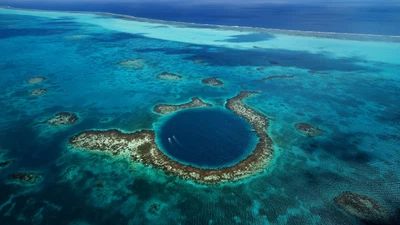
JEDDAH— Saudi Arabia has announced one of its most significant environmental milestones to date, officially designating its mysterious Red Sea Blue Holes as part of an expansive new marine conservation zone. The protected area stretches hundreds of kilometers, covering key coastal regions from Makkah Province down to Jazan, marking a decisive step in the Kingdom’s long-term strategy to safeguard fragile marine ecosystems and underprop biodiversity across its Red Sea shoreline.
Government officials confirmed that the conservation zone will encompass multiple Blue Holes—ancient underwater sinkholes formed over millions of years—each known for its striking deep-blue coloration, steep vertical walls, and unique marine systems. These formations, rarely accessible and only partially mapped, are considered among the most ecologically valuable natural features in Saudi waters.
A National Move Toward Marine Protection
In a statement released through national environmental bodies, authorities foreground that the new conservation zone represents one of the largest marine protection efforts in the Kingdom’s history. The initiative aligns with Saudi Arabia’s broader environmental goals under Vision 2030, including the Saudi Green Initiative and the National Environment Strategy, both aimed at restoring marine life, reducing ecological threats, and positioning the country as a global leader in sustainable coastal governance.
Officials noted that the Blue Holes host interconnected environments—dense coral networks, rare fish species, ancient geological structures, and isolated ecosystems that have evolved over long time scales. These characteristics make them not only scientifically valuable but also highly sensitive to climate pressures such as warming waters and coral bleaching.
A Natural Laboratory for Scientists
Marine scientists have long regarded blue holes as potential natural laboratories for understanding marine evolution. Their isolated environments often preserve biological and geological records absent in open waters.
Local marine biologist Dr. A. Al-Sharif, who has been involved in previous Red Sea surveying missions, described the Blue Holes as “some of the least understood yet most ecologically rich structures in the region.”
“Saudi Arabia’s Blue Holes are time capsules,” Dr. Al-Sharif said. “They contain millions of years of geological layering, rare species adapted to extreme depths, and coral formations that differ from anything seen in standard reefs. Their conservation is essential not just for ecology, but for scientific discovery.”
Preliminary surveys conducted over the past decade have identified species that appear to exist only within these areas, as well as reefs capable of surviving conditions that typically destroy coral elsewhere. Scientists believe these insights could become crucial in global research on coral resilience and climate adaptation.
Balancing Conservation and Ecotourism
The new conservation designation is expected to regulate human activity around the Blue Holes, limiting fishing, restricting vessel access, and implementing controlled diving zones. Officials confirmed that ecotourism will be allowed but only under strict guidelines to prevent disturbance of delicate habitats.
The Red Sea coast has become a centerpiece for Saudi Arabia’s sustainable tourism development. With projects such as The Red Sea Project, NEOM’s coastal zones, and multiple marine sanctuaries already underway, the Blue Holes are expected to become an additional focal point for nature-focused visitors, researchers, and conservationists.
Local tourism operators in Jeddah and Jazan welcomed the announcement, noting that increased visibility for the Blue Holes could help position Saudi Arabia as a global destination for diving and nature exploration—comparable to sites in the Maldives, Belize, and Egypt’s Sinai Peninsula.
Threats Prompting Urgent Action
Marine ecosystems in the Red Sea face increasing pressures from global warming, coral bleaching, overfishing, and coastal development. Studies show that the Red Sea’s climate-resilient corals may be among the last surviving reef systems if global temperatures continue to rise.
By designating Blue Holes as protected zones, the Saudi government aims to create ecological buffers that will help preserve biodiversity and strengthen the resilience of marine species. The move will also enable long-term scientific monitoring, which officials say is essential for understanding environmental changes and freshwater seepage patterns that influence these sinkholes.
A Step Toward Global Marine Leadership
International environmental groups have taken note of Saudi Arabia’s recent conservation efforts. Over the past three years, the Kingdom has launched multiple marine initiatives, planted millions of trees, and partnered with international research organizations to study its coral reefs.
The addition of Blue Holes to the conservation map signals a new phase in the Kingdom’s environmental transformation—one that combines scientific ambition, environmental stewardship, and strategic management of natural assets.
A senior environmental official described the announcement as a milestone that places Saudi Arabia among nations dedicated to large-scale marine protection.
Looking Ahead
Authorities confirmed that more detailed mapping of the Blue Holes will take place throughout 2025 and 2026, with upcoming studies expected to reveal deeper geological structures, hidden species, and unexplored chambers within the sinkholes.
As conservation plans move into implementation, the Blue Holes—once inaccessible and known mostly to specialized divers—are now emerging as Saudi Arabia’s newest environmental symbol: a blend of natural mystery, scientific promise, and national heritage lying beneath the depths of the Red Sea.