As the UAE celebrates its 54th National Day (Eid Al Etihad), many citizens and residents are reflecting on what this special day means for them. For Emirati pilot and comedian Rashed Al Falasi, the day resonates with memories, gratitude, and evolving appreciation for his country. His reflections, shared in a recent interview, echo a broader sense of unity, identity and familial warmth that define the National Day for many across the Emirates.
A Personal Journey: From Childhood Excitement to Family Calm
According to Rashed Al Falasi, the way he experiences National Day has changed with time. As a child, the day was about running through the streets with friends and feeling the buzz of festivities. But today, it’s all about a quieter, deeper kind of joy – barbecues at home, family gatherings, and shared meals with loved ones. He says:
“You appreciate the calm more; you appreciate the people around you more.”
For him, the National Day is no longer just fireworks and flag-waving. It’s a moment of reflection, of reconnecting with family and heritage, of passing down a sense of identity and pride to younger generations.
The 54th National Day: Unity, Pride and Progress
This year’s National Day marks the 54th anniversary of the founding of the United Arab Emirates – a union that began on December 2, 1971, when six emirates formed the initial federation.
Over the years, what started as a political union evolved into a shared identity, a shared dream of progress, tolerance, and unity under one flag.
For many Emiratis and residents, including Al Falasi, Eid Al Etihad isn’t just a holiday – it’s a reaffirmation of belonging, a chance to honour the sacrifices and vision of the founding generation, and a celebration of the nation’s rapid transformation.
National Day Traditions: Unity Across Generations
The ways people celebrate have changed, but certain traditions remain central:
Families gather in homes, farms, or community “freejs” (neighborhoods), often beginning the day together.
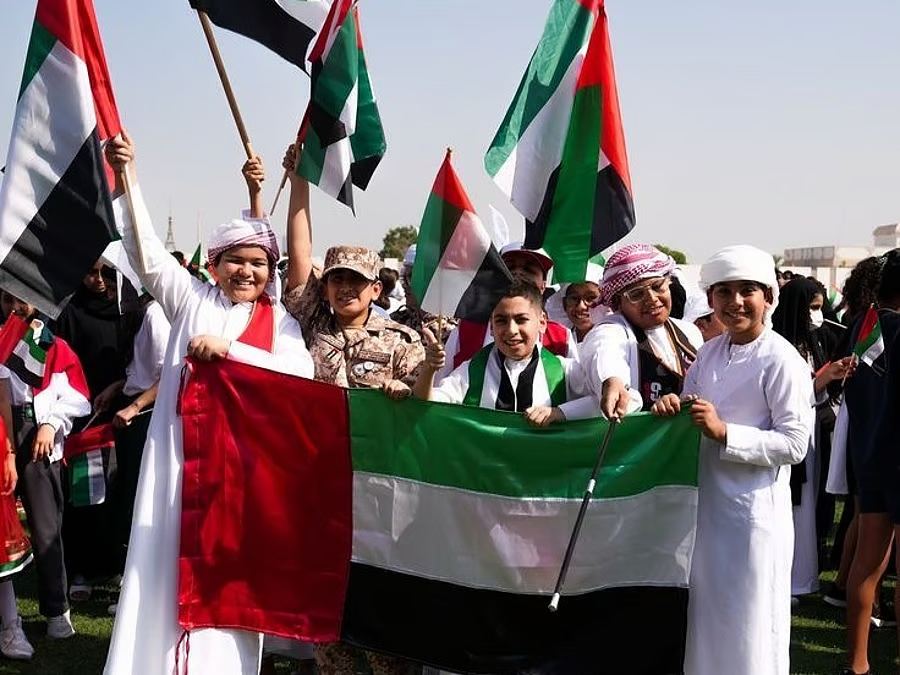
Homes and streets are decorated with the colours of the national flag; flags and emblems of unity are displayed everywhere.
Communities celebrate with cultural shows, heritage events, food, and traditional activities – blending history with modernity.
For many, the day is more than celebration – it’s a moment to share stories with younger generations, teaching them why the Union matters, how the country has grown, and what it stands for.
Al Falasi’s reflection – that National Day now means calm gatherings and gratitude – resonates with a wider feeling described by many Emiratis: that the “spirit of the Union” now lives in homes, in memories, and in shared values.
What National Day Means to Rashed Al Falasi – and to the UAE
For Rashed Al Falasi, National Day is:
A time for belonging – to family, to history, and to a country shaped by unity.
A moment of gratitude – for the opportunities afforded by the Union, for progress and peace, for shared identity.
A bridge between past and future – carrying forward traditions, values, and a sense of responsibility towards future generations.
His journey – from childhood excitement to mature reflection – is emblematic of how many Emiratis view this day: not just as a commemoration of a political event, but as a living, breathing part of daily life – rooted in love, pride and unity.
If you like – I can expand this into a feature-style article (≈ 600–800 words) with quotes, background context, and a closing “message to readers” section – ready to publish on arabianbusinesstime.com.
Would you like me to build that for you now?