What inspired you to start your journey as an entrepreneur, and how has it evolved over the years?
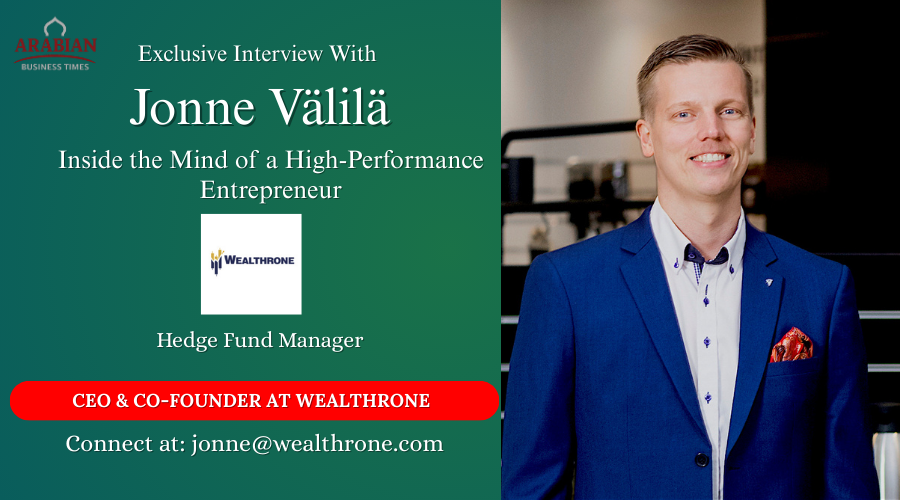
Answer: I’m a naturally born entrepreneur, started by selling skateboard parts from my parents’ garage. I have a Bachelor of Entrepreneurship, and this has basically always been the only path for me. I genuinely value freedom in life and have always had huge goals, so this journey has felt quite obvious from the beginning.
What have been some of the most significant challenges you’ve faced, and how did you overcome them?
Answer: Entrepreneurship is challenges after challenges. Every day there’s a new problem, and ultimately it is your responsibility to solve it. Even with a big team, the most difficult issues end up on your table. So, to answer the question, having a “most significant challenge” is just another Monday. The bigger you grow, the bigger the challenges become. If you don’t constantly face new challenges, you’re most likely not growing. You want new challenges, bigger than before, that’s the best sign you’re heading in the right direction.

Can you share a key mistake or setback that taught you an important business lesson?
Answer: We are in the business of managing assets, investing other people’s money. In the beginning, when we were practising with our own capital, we thought we could predict where the market was heading. After a few successful guesses, we naturally failed and lost. Nobody can predict short-term market movements consistently. That’s why we developed trading algorithms that simply capture inefficiencies and volatility, aiming to work whether prices go up or down.
How do you stay motivated and focused during uncertain or difficult times?
Answer: Business is a game. It only makes sense to play if you enjoy the game. Every long-term game comes with wins and losses. When times are harder, you just need to push more, and the easiest way to stay motivated is to keep your goals in mind.
What habits or routines have been essential to your success as an entrepreneur?
Answer: Eating healthy, exercising a lot, sleeping enough, and skipping nonsense like going to nightclubs and watching TV. Business is much easier when you are in good shape, both mentally and physically, and have a lot of energy. I work almost all of my waking hours, so it wouldn’t be sustainable if I had low energy. Also, listening to audiobooks (when exercising) and good business podcasts has been crucial. You need to constantly educate yourself if you aim for the top.
How do your personal passions, such as racing or fitness, influence your leadership and business mindset?
Answer: I see you’ve read my LinkedIn bio! I strongly promote a healthy lifestyle to all our team members. I think it was around 2019 when I told the team they should schedule daily exercise first in their calendars and prioritize it over everything else and that if we go bankrupt because nobody worked during those training sessions, I’d rather take that than an unhealthy team.
How do you approach identifying and pursuing new business opportunities?
Answer: “Strategy means choosing what not to do.” As entrepreneurs, we tend to get excited about new opportunities, that’s just our nature. But at least 80% of tempting new opportunities should be skipped, if not more.

What’s your philosophy on balancing innovation with calculated risk-taking?
Answer: In our business of asset management, we constantly need to innovate new trading strategies, because market inefficiencies (which we aim to harness) won’t last forever. So we test new ideas and strategies with our own capital typically for at least 12 months before implementing them into client structures. Doing it much faster would be too risky.
How do you maintain a clear long-term vision while managing day-to-day operations?
Answer: All companies have a vision, but if you ask a random team member of a random company, many don’t know what their vision is. It’s often hard to get the team to internalise it. As a business leader, you need to repeat the vision like a broken record, over and over again. When the vision is deeply understood, everyone’s day-to-day work tends to align naturally.
What advice would you give to aspiring entrepreneurs looking to build successful global businesses?
Answer: Two things that are somewhat contradictory. First, “Ready, Fire, Aim” is a great approach: stop overplanning and just start, and learn by doing. There is no better time to start a business than today. At the same time, don’t risk much in the beginning, because most ideas fail. The only honest feedback you’ll receive early on is from the market. If random people buy your product, you may have something; if no one buys, maybe the idea isn’t that good. For example, if your idea is to build an online course about getting a six-pack, don’t film & edit the videos and build the full course environment first. First, build the sales funnel and start advertising the course. After the checkout page, tell customers the course will start in, say, 30 days, and if they don’t like that, offer an immediate 100% refund. If you get enough purchases in the first 10 days, spend the next 20 days actually building the course. It is absolutely crucial that you actually take the money, asking “would you buy?” has zero value; you want to know if people are actually paying or not.