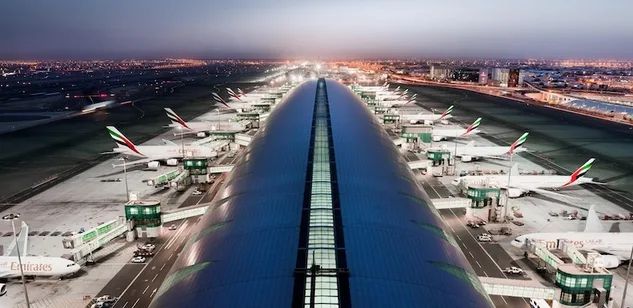
Dubai International Airport (DXB) continues to cement its position as a global aviation powerhouse, retaining its status as the world’s busiest international airport in 2025. With 62.4 million international seats scheduled this year, DXB has once again stayed ahead of major global hubs, including London Heathrow, underscoring Dubai’s central role in global air travel.
The figures highlight DXB’s unmatched connectivity, linking travellers across Europe, Asia, Africa and the Americas through an extensive network of airlines and destinations. Its strategic geographic location – within eight hours of two-thirds of the world’s population – has long been a competitive advantage, but sustained investment in infrastructure and airline partnerships has kept the airport ahead of rivals.
Passenger traffic is also on a strong upward trajectory. Dubai Airports expects passenger numbers to reach 95.3 million by the end of 2025, edging closer to the symbolic 100 million passenger milestone, which is now projected to be achieved by 2027. If realised, this would place DXB among a very small group of airports worldwide capable of handling such volumes annually.
The growth reflects a strong rebound in international travel, driven by tourism, business travel and Dubai’s expanding role as a transit hub. Flag carrier Emirates continues to be a major contributor, operating one of the world’s largest long-haul networks from DXB, while flydubai and numerous international airlines add depth and frequency to the airport’s offerings.
Despite operating close to capacity, DXB has maintained operational efficiency through technology upgrades, streamlined passenger processing and coordinated airspace management. Dubai Airports has also focused on improving the passenger experience, investing in digital check-in, biometric services and enhanced retail and dining options.
Looking ahead, DXB’s growth is part of a broader aviation strategy that includes the long-term development of Al Maktoum International Airport (DWC). Once fully expanded, DWC is expected to become the world’s largest airport by capacity, eventually easing pressure on DXB while allowing Dubai to accommodate future demand.
For travellers, DXB’s continued dominance means more choice, better connectivity and increased competition among airlines. For Dubai, it reinforces the emirate’s position as a leading global gateway for trade, tourism and mobility.
As international travel demand continues to rise, DXB’s performance in 2025 shows that Dubai remains firmly at the centre of global aviation – and is preparing to soar even higher in the years ahead.