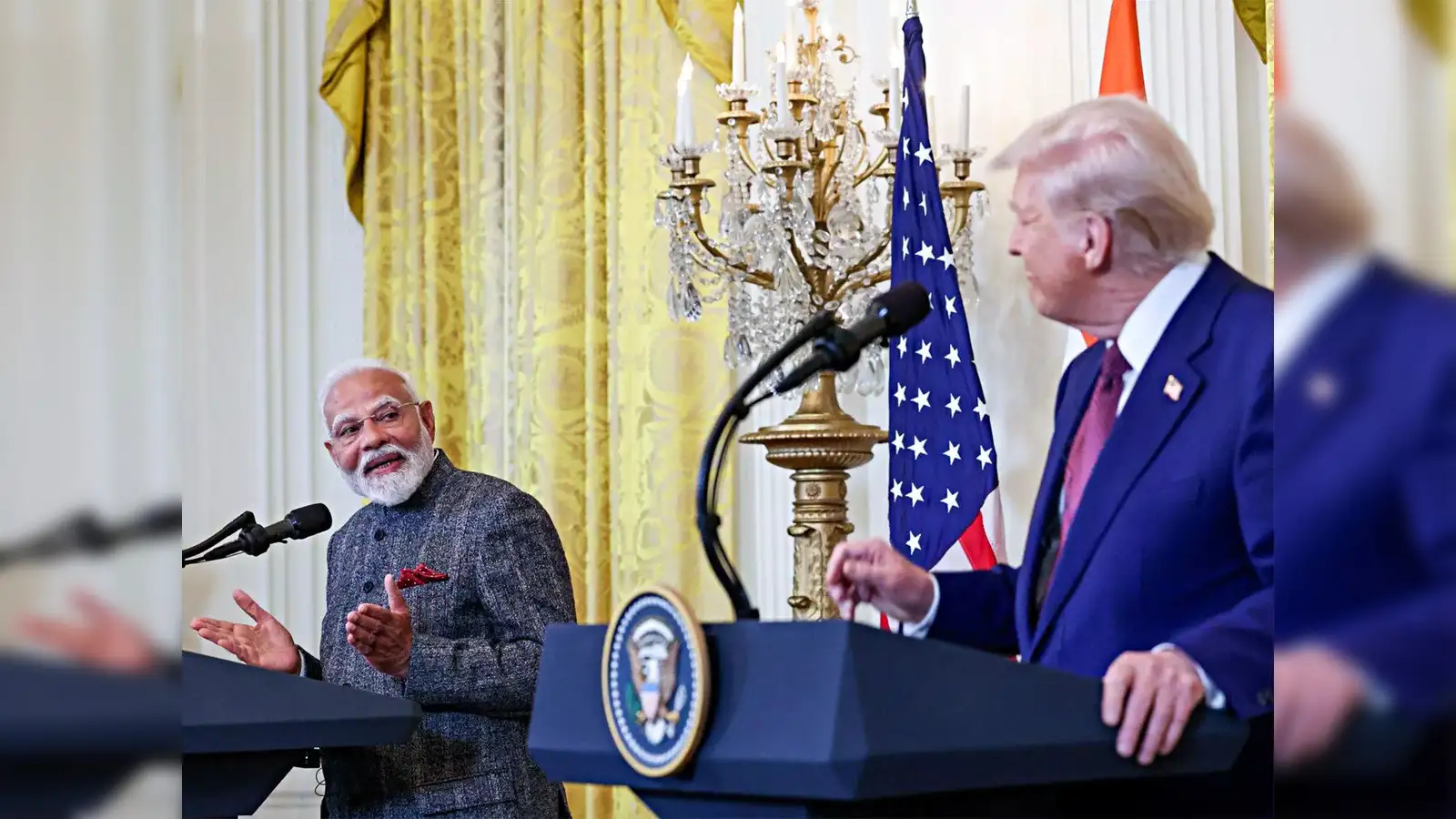
In a major development for global trade, US President Donald Trump announced a landmark trade agreement with India, reducing reciprocal tariffs and signalling a new era of economic cooperation between the two countries.
Under the agreement, tariffs on Indian exports to the US will be cut from 25% to 18%, while India will gradually move toward zero tariffs on US goods. The deal is aimed at boosting bilateral trade, investment, and economic engagement, covering sectors from energy and technology to consumer products.
Speaking on the announcement, Prime Minister Narendra Modi thanked President Trump “on behalf of the 1.4 billion people of India”, and committed to expanding American imports with plans to purchase over $500 billion in US energy, technology, and other products in the coming years. The initiative underscores both countries’ intent to deepen strategic economic and trade ties.
The deal is expected to have wide-ranging implications for exporters, importers, and investors, providing Indian businesses with greater access to US markets while giving American companies expanded opportunities in India. Economists note that reduced tariffs may stimulate growth, encourage investment, and enhance competitiveness on both sides.
Industry leaders have welcomed the move, calling it a win-win for trade relations, particularly in sectors such as renewable energy, aerospace, pharmaceuticals, and digital technology. Analysts also highlighted that the agreement could strengthen the US-India economic partnership at a time of shifting global trade dynamics.
Both governments have indicated that the pact will include mechanisms for ongoing dialogue, dispute resolution, and regulatory cooperation, ensuring the agreement adapts to market realities and fosters long-term growth.
The trade deal marks a significant milestone in US-India relations, reflecting mutual priorities to increase economic engagement while supporting jobs, innovation, and investment on both sides of the Pacific.