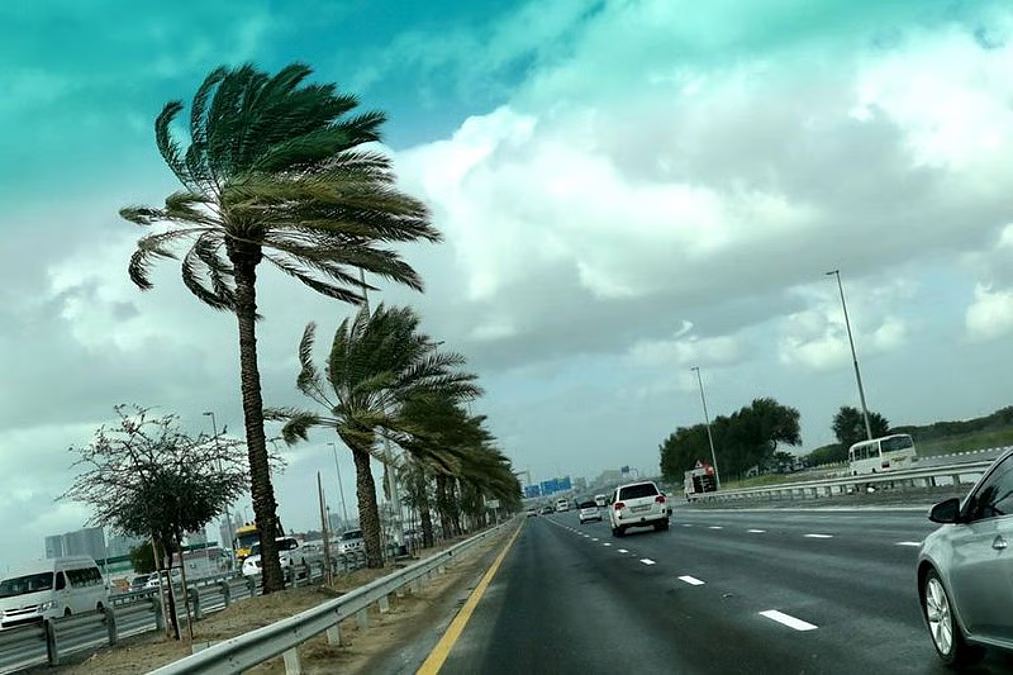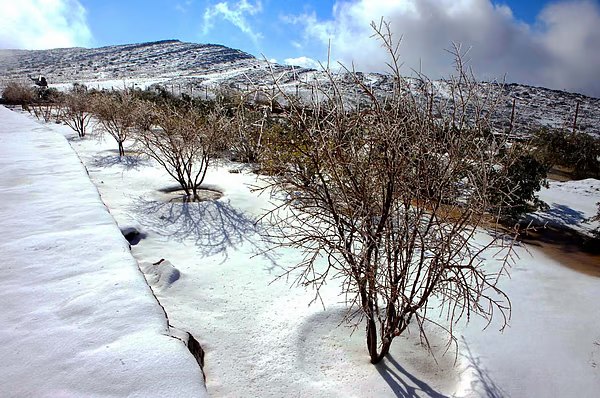
Winter delivered its sharpest chill yet across the UAE as temperatures at Jebel Jais dipped close to 0°C, marking one of the coldest moments of the season. The drop came as a cold air mass swept across the country, bringing biting winds, clearer skies, and frost-like conditions in mountainous areas.
According to meteorological officials, higher-altitude regions were the most affected, with Jebel Jais once again recording the lowest temperatures nationwide. Early morning hours were particularly cold, with strong winds intensifying the chill and making conditions feel colder than the thermometer suggested. Some residents in mountain areas reported icy ground and heavy dew resembling frost.
Weather experts say the cold spell is being driven by the movement of colder air from the north, combined with clear skies that allow heat to escape rapidly overnight. These conditions are typical during the peak of winter but remain striking in a country better known for its heat.
Inland and desert areas also experienced noticeably cooler conditions, while coastal cities saw lower-than-average temperatures, especially during the night and early morning. The contrast between cold nights and relatively mild daytime temperatures is expected to continue during this phase of winter.
Authorities have advised residents planning trips to mountainous regions to take precautions, including wearing warm clothing and checking weather updates before travelling. Campers and outdoor enthusiasts are also urged to prepare for colder-than-expected nights, particularly in open or elevated areas.
The cold snap follows earlier forecasts from the National Centre of Meteorology, which had warned that January would bring the coldest days of the season. While temperatures are expected to gradually moderate, similar cold mornings could still occur as winter continues.
For many residents, the near-freezing readings serve as a reminder that the UAE’s winter, though short, can be intense – especially in high-altitude areas. As the cold air mass lingers, officials continue to monitor conditions and issue updates, urging the public to stay informed and prepared.