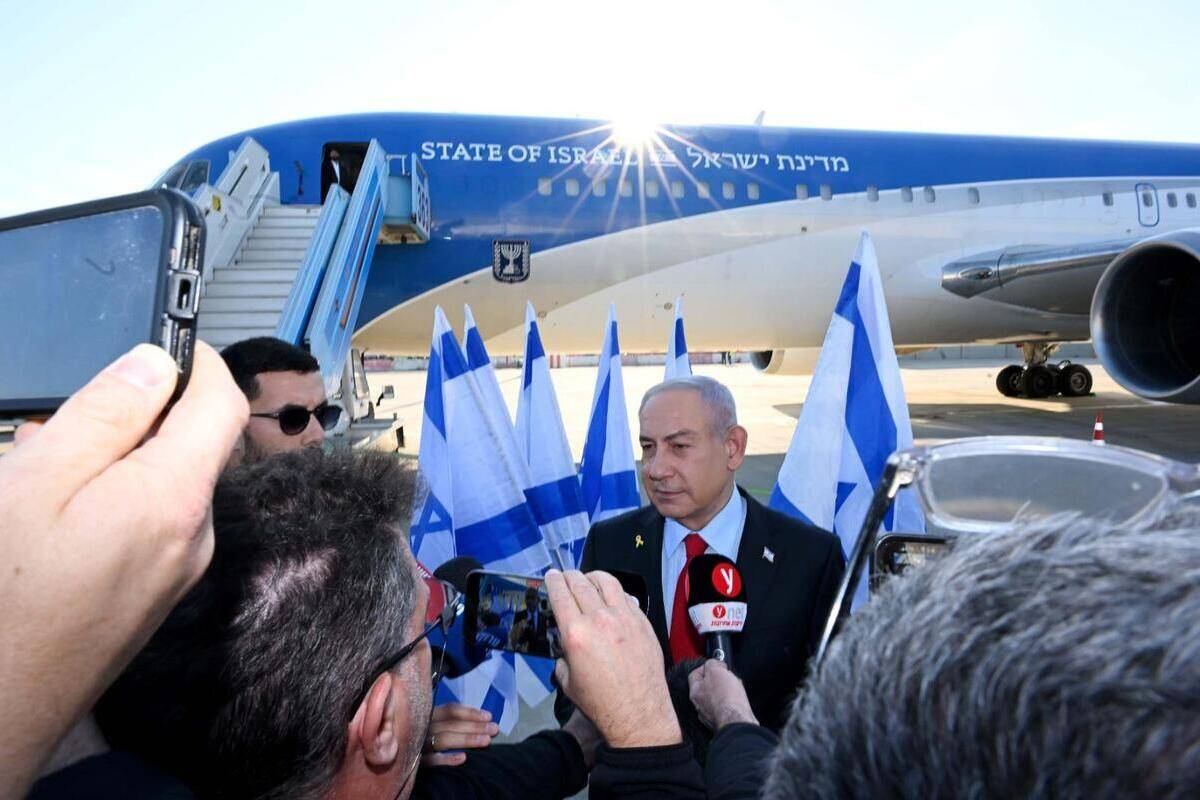
Israel has confirmed that Prime Minister Benjamin Netanyahu’s aircraft, known as the Wing of Zion, departed Israeli airspace as part of a routine training exercise, rejecting speculation that the flight was linked to an emergency evacuation amid rising regional tensions.
Israeli officials said the movement of the aircraft followed standard security and operational protocols and was not connected to any immediate threat. The clarification came after reports and online speculation suggested the flight could be related to escalating instability in the region, particularly involving Iran.
The confirmation comes at a time of heightened geopolitical strain. Iran is facing international scrutiny following a deadly crackdown on anti-government protesters, with reports of mass arrests and the threat of executions. US President Donald Trump has warned that “very strong action” would follow if Iran proceeds with executions, signalling a possible escalation in Washington’s response.
According to US media reports, Trump has reviewed a range of options, including military and cyber measures, as the administration weighs how to respond to developments inside Iran. While no formal decision has been announced, the rhetoric has raised concerns across the Middle East about the risk of retaliation or miscalculation.
Israel, which views Iran as its primary regional adversary, has reportedly raised its security alert to the highest level. Defence officials are said to be preparing for a range of scenarios, including the possibility of Iranian retaliation or actions by Iran-aligned groups in the region. Israel maintains that it is closely monitoring developments and coordinating with key allies.
The Wing of Zion aircraft is used for official international travel by Israel’s prime minister and president and is subject to strict security procedures. Analysts note that routine training flights are common and are often conducted regardless of regional conditions, though their timing can attract attention during periods of crisis.
Regional observers say the current situation underscores how quickly tensions can spill across borders. Iran’s internal unrest, combined with strong warnings from Washington and heightened Israeli security measures, has created a volatile backdrop that keeps markets, diplomats, and militaries on edge.
Despite the denials of any emergency, the incident highlights the sensitivity of movements involving senior leaders during periods of instability. For now, Israeli officials insist there has been no change in leadership security arrangements beyond precautionary measures.
As diplomatic pressure mounts and rhetoric intensifies, attention remains focused on whether threats will translate into action – and how regional actors respond in what many analysts describe as a delicate and dangerous moment for Middle East stability.